
When Did Ford Own Jaguar? – Discover Ownership Facts
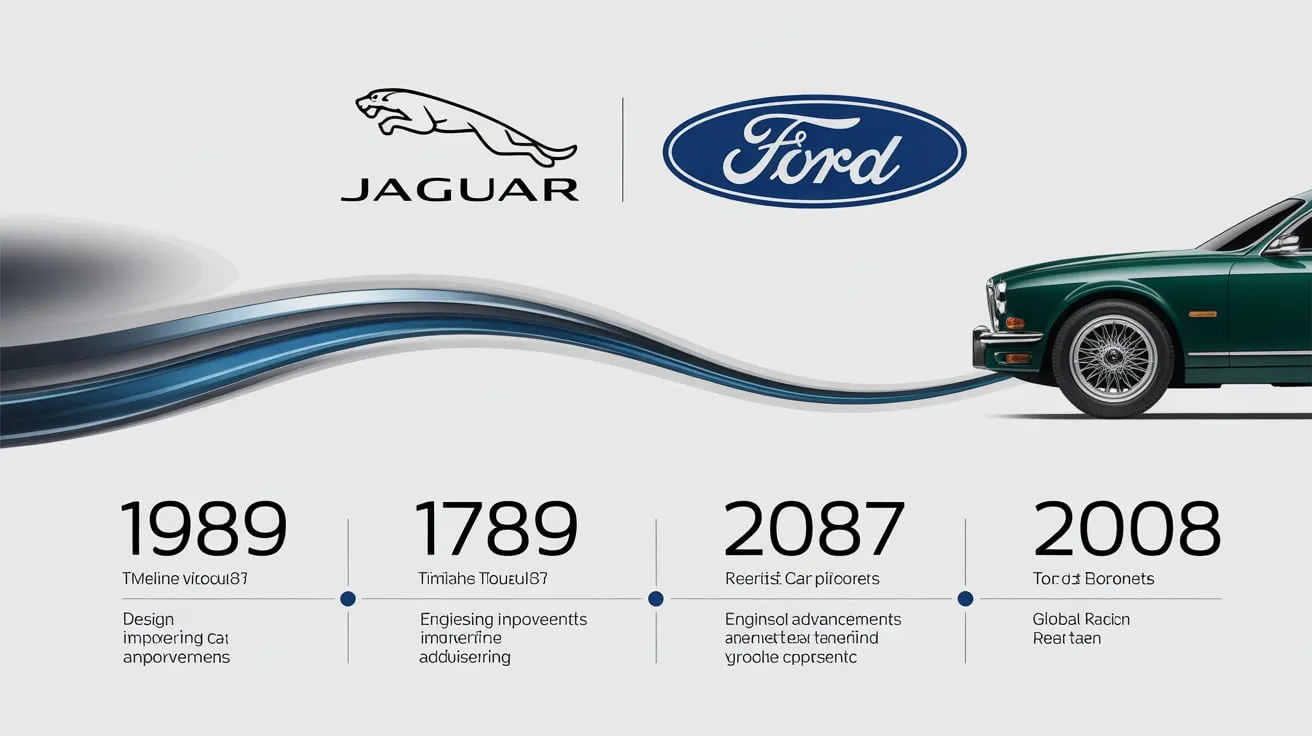
Ford owned Jaguar from 1989 to 2008. During this period, Ford improved Jaguar’s design, build quality, and global reputation. Although Ford later sold Jaguar to Tata Motors, its influence can still be seen in Jaguar’s modern luxury cars.
In this article, we clearly explain the exact period Ford owned Jaguar, why Ford bought it, the changes that occurred, and how this ownership affected Jaguar’s cars, quality, and global image.
Introduction to Ford and Jaguar Connection
Ford is known for powerful, affordable vehicles. Jaguar stands for British luxury and style.
In the late 1980s, Ford aimed to expand into the luxury car market, and Jaguar was the ideal brand to achieve that goal.
Background of Jaguar Before Ford Ownership
Before Ford owned it, Jaguar faced challenges.
- The company had a strong heritage but weak finances.
- Its production methods were outdated.
- Quality issues affected sales and customer trust.
Jaguar needed a global partner to modernize its image and operations.
Why Ford Decided to Buy Jaguar
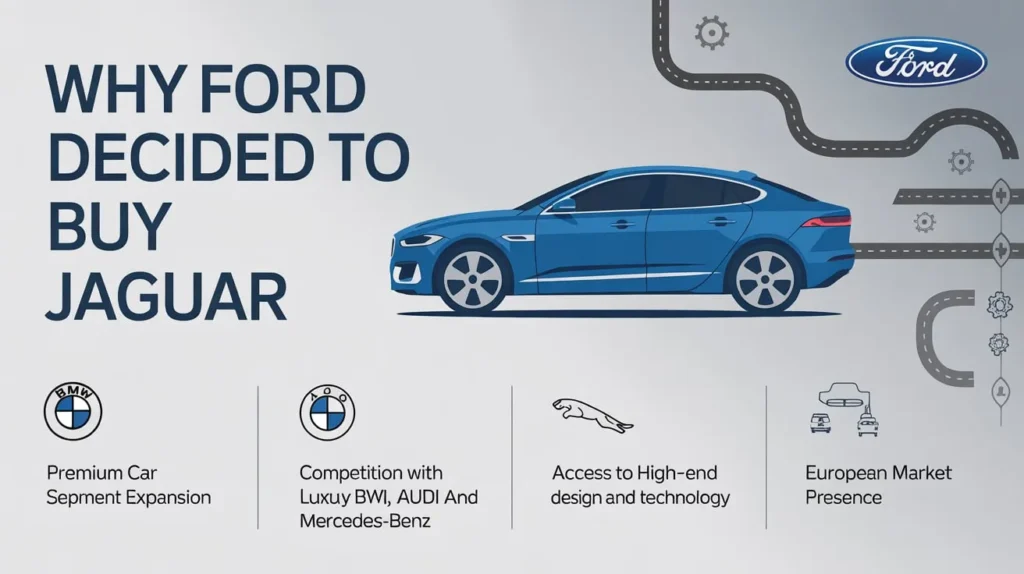
Ford saw Jaguar as a chance to grow in the Premium segment.
- It wanted to compete with BMW, Audi, and Mercedes-Benz
- Jaguar gave Ford access to high-end car design and technology.
- The move also helped Ford set up a strong presence in Europe.
The Year Ford Purchased Jaguar
Ford bought Jaguar in 1989, entering the luxury car market.
It was a turning point—Ford gained prestige, Jaguar gained financial strength.
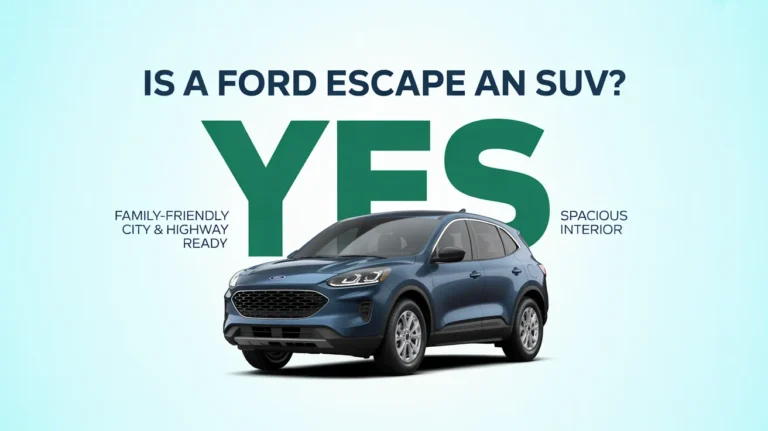
Also Read: Is a Ford Escape an SUV – Know Before Buying
How Much Did Ford Pay for Jaguar
Ford paid around $2.5 billion to buy Jaguar.
It was a major investment at the time, demonstrating Ford’s commitment to growing in the luxury market.
Impact of Ford’s Ownership on Jaguar’s Quality and Design
Under Ford, Jaguar cars became more modern and reliable.
- Ford introduced advanced production systems.
- Quality improved in both materials and performance.
- Jaguar’s reputation for craftsmanship began to recover.
Major Jaguar Models Released Under Ford’s Ownership
During Ford’s ownership, Jaguar launched several key models:
- Jaguar S-Type (1999)
- Jaguar X-Type (2001)
- Jaguar XK (2006)
These models combined Ford’s engineering and Jaguar’s luxury.
Challenges Faced by Ford During Jaguar Management
Despite these improvements, Ford encountered several challenges managing Jaguar, including high production costs and low profits.
- Slow sales in the luxury market.
- Global competition from strong European brands.
Collaboration Between Ford and Other Luxury Brands
To manage multiple Premium brands, Ford created the Premier Automotive Group (PAG).
It included:
- Jaguar
- Land Rover
- Volvo
- Aston Martin
When and Why Ford Sold Jaguar
Ford sold Jaguar in 2008.
- The global financial crisis hurt luxury car sales.
- Ford needed to focus on its core vehicle lineup.
- Selling Jaguar helped Ford recover financially.
Who Bought Jaguar After Ford Sold It
In 2008, Tata Motors, an Indian automotive company, purchased Jaguar and Land Rover for $2.3 billion.
- Tata provided Jaguar with improved management and renewed innovation.
- Under Tata, Jaguar returned to profitability and creativity.
Legacy of Ford’s Ownership on Jaguar’s Modern Vehicles
Ford’s time with Jaguar left a strong foundation for the brand’s future, including better engineering and production systems
- Higher build quality and modern technology.
Stronger global presence and brand trust.
Even after selling, Ford’s influence shows in today’s Jaguars.
Also Read: 2014 Ford Focus Oil Type
Lessons Ford Learned from Owning Jaguar
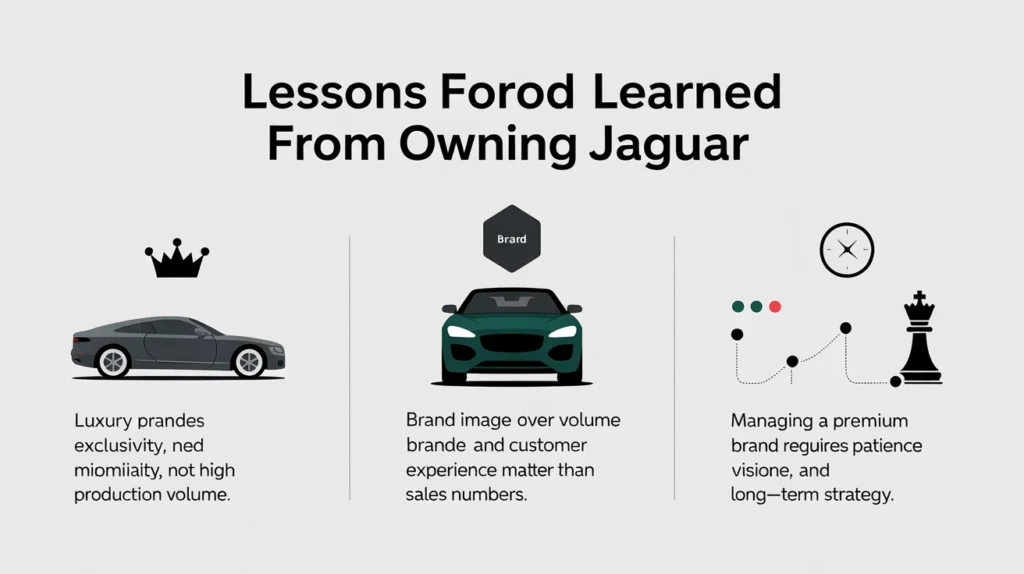
Ford gained valuable insight from owning a luxury brand: luxury requires exclusivity, not high production volume
- Brand image and customer experience matter more than volume.
- Managing a Premium brand needs patience and vision.
FAQ’S:
1. Did Ford ever fully own Jaguar?
Yes. Ford fully owned Jaguar from 1989 until its 2008 sale.
2. Was Ford successful with Jaguar?
Partly yes, Ford improved Jaguar’s quality, design, and production, but it struggled to turn a profit. The brand’s image improved, even though sales were lower than expected.
3. Is Jaguar still connected to Ford today?
No. Jaguar is now owned by Tata Motors, an Indian company. However, Ford’s engineering influence can still be seen in some of Jaguar’s modern designs and systems.
4. What improvements did Ford make to Jaguar cars?
Yes. Ford added modern engines, advanced safety, and a stronger build. Jaguars became faster and smoother while retaining their luxury.
5. Why did Ford sell Jaguar, and what did it gain?
No. Ford didn’t fail but sold Jaguar in 2008 to cut costs. The sale helped Ford focus and survive the financial crisis.
Also Read: 2018 Ford Explorer Oil Type
Conclusion:
Ford owned Jaguar from 1989 to 2008, a period that helped reshape the brand. Ford improved Jaguar’s quality, technology, and global reach, even though profits remained a challenge. This ownership laid a strong foundation for Jaguar’s future success. Today, many of Jaguar’s modern strengths still reflect the changes made during the Ford era.
One Comment