
Ford Non-Interference Engine List – Explore Engines!
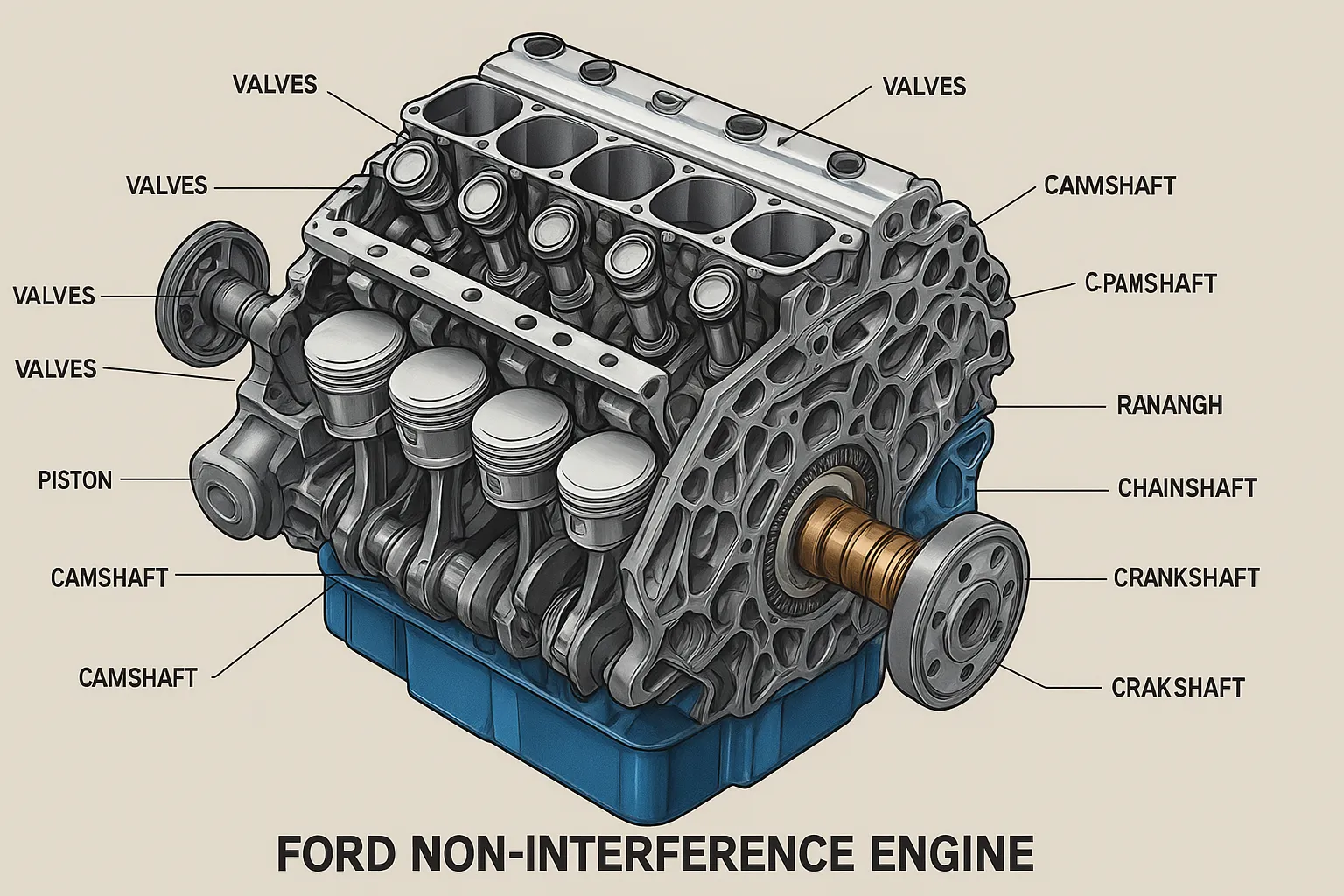
The Ford Non-Interference Engine List tells you which Ford engines are safe if the timing belt breaks. In these engines, valves and pistons do not hit each other, saving you from heavy repair costs.
In this article, you can understand the engines that can help every driver make smarter and more confident decisions about their Ford.
What Is a Non Interference Engine in Ford Vehicles?
A non-interference engine in Ford vehicles is designed so pistons and valves never touch each other, even if the timing belt breaks. This makes the engine safer, prevents sudden damage, and helps drivers avoid expensive repair costs.
Why Does the Interference vs. Non-Interference Engine Matter?
The difference between interference and non-interference engines matters because it decides repair costs. In interference engines, a broken timing belt can damage valves and pistons. In non-interference engines, parts stay safe, saving money and avoiding major repairs.
Why Should You Choose a Ford Non Interference Engine?
You should choose a Ford non-interference engine because it is safer and cheaper to maintain. If the timing belt breaks, pistons and valves do not crash, preventing serious engine damage and saving you from high repair costs.
Ford Non Interference Engine List by Model and Year
The Ford Non-Interference Engine List by Model and Year helps you know which Ford cars have safer engines. These engines prevent valve and piston damage if the timing belt breaks, saving owners from expensive repairs and keeping vehicles reliable.
Below is the carefully compiled Ford non interference engine list that includes some of the most popular and widely used Ford engines:
1.Ford 2.3L OHC “Lima” Engine
- The Ford 2.3L OHC “Lima” engine is a strong 4-cylinder engine.
- First used in the 1970s, known for durability and easy repair.
- Found in Ford Ranger, Mustang, and Pinto.
- Popular for reliability, long life, and affordable parts.
2. Ford 2.5L OHC HSC (High Swirl Combustion) Engine
- The Ford 2.5L OHC HSC engine was made for smooth power and better fuel efficiency.
- “High Swirl Combustion” design gives cleaner burning and low emissions.
- Known for reliability, easy maintenance, and long life in Ford vehicles.
3. Ford 3.0L Vulcan V6 Engine
- The Ford 3.0L Vulcan V6 engine is a strong, simple, and long-lasting engine.
- First used in the 1980s, it powered Ford Taurus, Ranger, and other models.
- Known for low cost, easy repair, and reliable daily use.
4. Ford 2.0L SOHC Split Port Engine
- The Ford 2.0L SOHC Split Port Engine is a 4-cylinder engine.
- It is simple, reliable, and fuel-efficient.
- Commonly found in Ford Escort and Focus models.
- Easy to maintain with affordable parts.
- Good option for daily driving.
5. Ford 2.9L Cologne V6 Engine
- The Ford 2.9L Cologne V6 engine was made in the 1980s–1990s.
- It is known for good torque and reliability in small trucks and SUVs.
- Common problems include head cracks and overheating, so maintenance is important.
6. Ford 3.8L Essex V6 Engine
- The Ford 3.8L Essex V6 engine was used in cars like Ford Taurus, Mustang, and Windstar.
- It gave good power but had head gasket problems in many models.
- Proper care and timely maintenance can increase engine life.
Are All Ford Engines Non Interference?
Not all Ford engines are non-interference. Many modern engines, especially high-compression designs, are interference engines, which improve efficiency. However, the classic Ford non-interference engines remain highly desirable for their durability, safety, and lower repair risks.
How to Know If Your Ford Has a Non-Interference Engine?
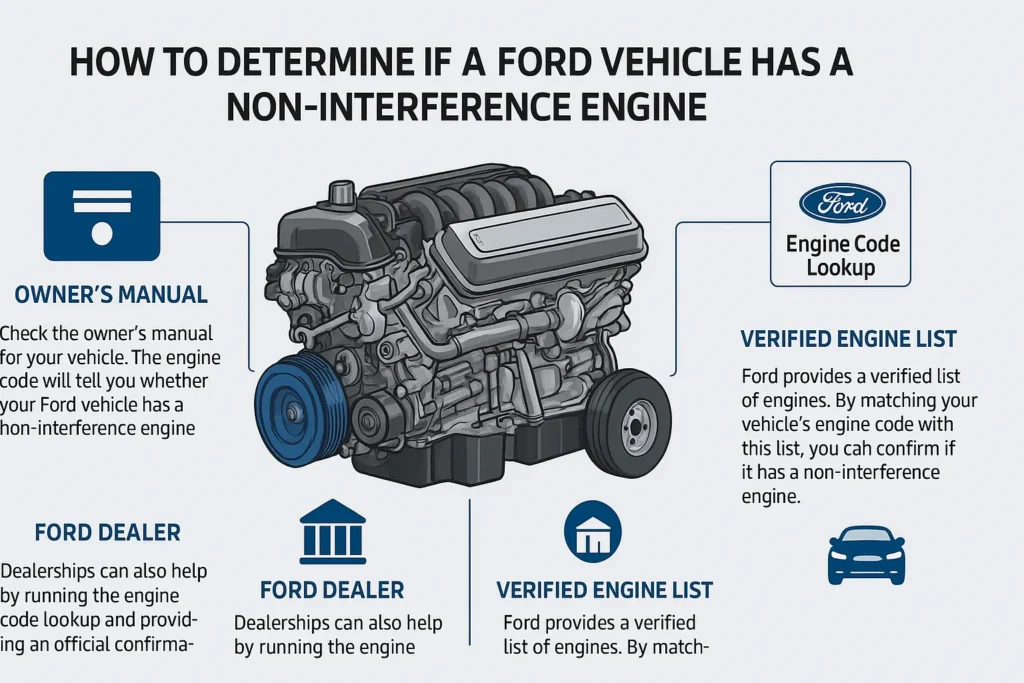
- To determine if your engine is non interference:
- Check your Ford owner’s manual or service guide.
- Search for your engine code and confirm specifications.
- Consult with a Ford dealership or trusted mechanic.
- Refer to verified Ford non interference engine lists like the one above.
Benefits of Ford Non Interference Engines in Daily Driving
- Safer engine – valves and pistons never hit each other.
- Lower repair risk if timing belt breaks.
- Saves money on costly engine damage.
- Gives peace of mind in daily driving.
- More reliable for long use.
Maintenance Tips for Ford Non Interference Engines
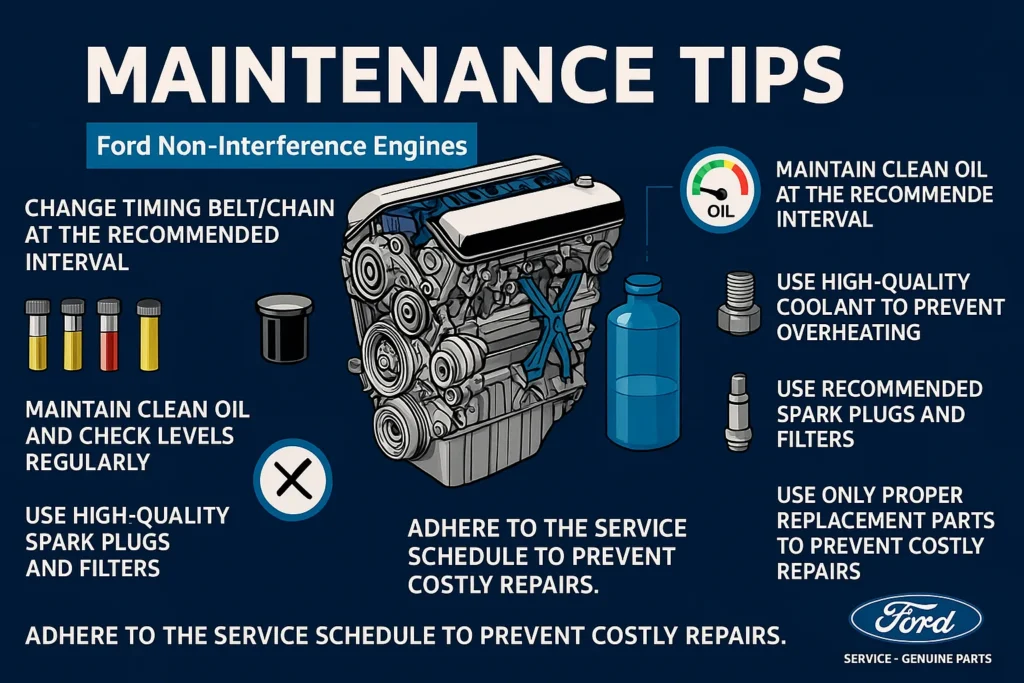
- Change timing belt/chain on recommended time.
- Keep oil clean and check levels often.
- Use good-quality coolant and prevent overheating.
- Replace spark plugs and filters regularly.
- Use only OEM-quality parts for replacements.
- Follow service schedule to avoid costly problems.
Future of Ford Non-Interference Engines
The future of Ford non-interference engines is an important topic for car owners who value safety and low maintenance. These engines are designed in a way that if the timing belt fails, the pistons and valves never collide. This prevents serious engine damage and saves drivers from costly repairs.
As technology changes, people wonder if Ford will continue making such reliable engines or move toward new designs. Understanding the future of these engines helps drivers make smart choices when buying, maintaining, or upgrading their vehicles. It also gives peace of mind about long-term durability and value.
FAQ’s:
1. Is a Ford non-interference engine easier to repair?
Yes, repairing a non-interference engine is often easier and less costly because valve and piston damage is avoided even if the timing belt fails.
2. Does every old Ford car have a non-interference engine?
No, not every old Ford car comes with a non-interference engine. Only selected models and engines were built with this safer design.
3. Can I drive if my timing belt breaks in a non-interference engine?
Yes, but only for a short distance. While the engine may not suffer major damage, the car will not run properly until the belt is replaced.
4. How do non-interference engines affect Ford vehicle resale value?
Non-interference engines can increase resale value because buyers feel more secure knowing the engine is less risky and cheaper to maintain.
5. Are Ford non-interference engines still a good choice for daily driving?
Yes, they remain a smart option for daily drivers who want durability, peace of mind, and lower repair costs compared to interference engines.
Conclusion:
The Ford Non-Interference Engine List helps drivers choose safer and more reliable engines. These engines reduce the risk of costly repairs, give peace of mind, and ensure long-term durability. Knowing which Ford engines are non-interference allows car owners to make smarter maintenance and buying decisions with full confidence.



5 Comments