2002 Ford Explorer Fuse Box Guide – Fix Fuses Fast
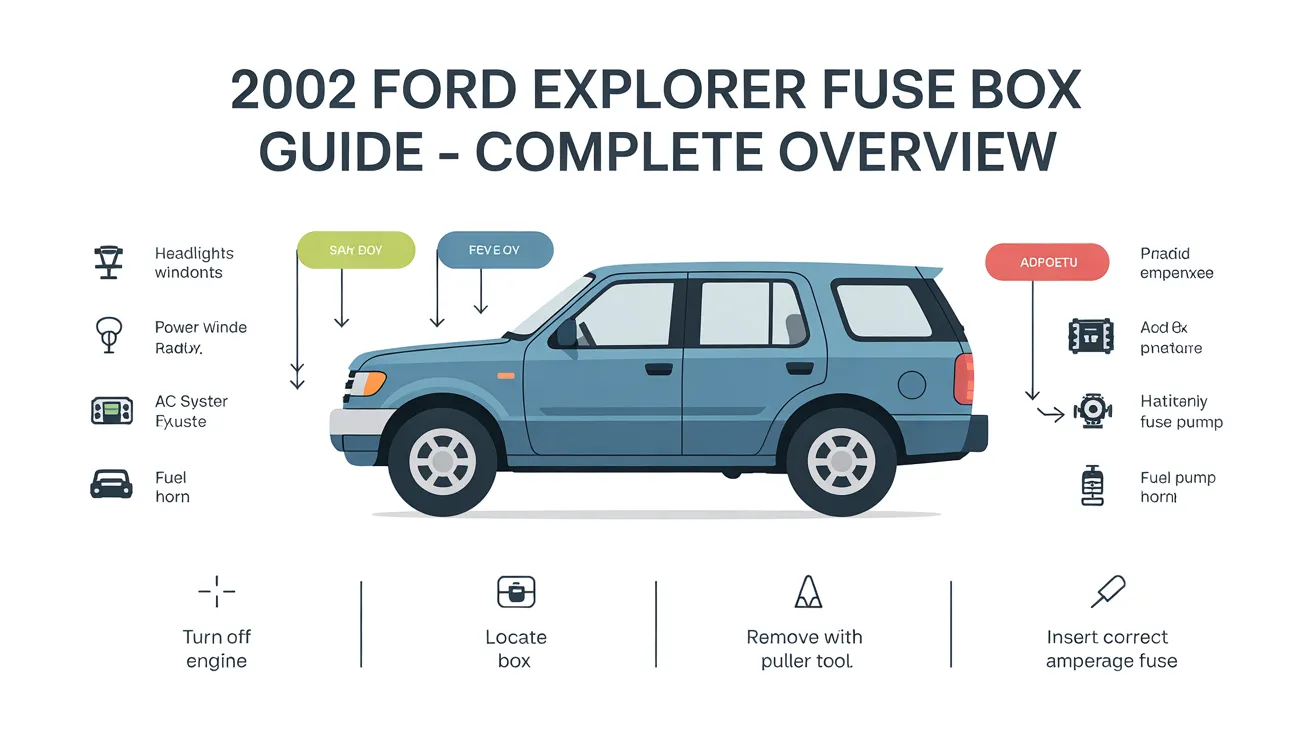
The 2002 Ford Explorer Fuse Box Guide helps you find each fuse location, understand its job, and fix common electrical problems fast. It shows the cabin and engine box layouts, so you can safely replace blown fuses and easily restore power today.
This guide explains where the 2002 Ford Explorer’s fuse boxes are, what each fuse does, and how to safely replace them.
Where Is the Fuse Box Located in the 2002 Ford Explorer?
There are two main fuse boxes in the 2002 Ford Explorer. One is located under the driver’s dashboard and controls interior features such as the lights and radio. The other is in the engine compartment, near the battery, and is responsible for engine and safety functions.
Interior Fuse Box Location
The interior fuse box is located under the dashboard on the driver’s side, close to the steering wheel. You may need to remove a small plastic cover to access it. This box primarily controls cabin systems, including the lights, radio, power windows, and seats.
Engine Compartment Fuse Box Location
The second fuse box is found under the hood near the battery on the driver’s side of the engine bay. It manages essential components such as the cooling fan, headlights, ignition system, and fuel pump — all critical to engine performance and safety.
Also Read: Is a Ford Escape an SUV – Know Before Buying
How to Identify the Correct Fuse
To find the right fuse:
Look at the fuse box cover for numbers and names.
- Match the fuse number to the one in your car’s manual.
- Find out what the fuse powers (like headlights, AC, or the radio).
- Always use a new fuse that has the same number as the old one.
Common Fuse Functions in the 2002 Ford Explorer
Fuses control many essential systems in your Explorer, such as:
- Headlights and taillights
- Power windows and door locks
- Radio and air conditioning
- Engine ignition and control system
- Wipers, horn, and safety sensors
Symptoms of a B. Typical signs of a blown fuse include: lights or AC.
- The fuse appears dark, cloudy, or broken on the inside.
- No power in switches or buttons related to that fuse.
Steps to Replace a Blown Fuse in Your Explorer: Replace a blown fuse in your Explorer by following these steps:e the keys.
- Open the fuse box and find the broken fuse
- Use a fuse puller or pliers to remove it.
- Replace the fuse with one of the same number as the old one.
- Close the box and see if the part works now.
🚗 2002 Ford Explorer Interior Fuse Box Diagram and Functions
| Fuse Number | Function / System Controlled | Fuse Rating (Amps) | Location / Notes |
| 1 | Interior lights, dome light | 10A | Under dashboard – driver’s side |
| 2 | Power mirrors | 10A | Controls left and right mirrors |
| 3 | Radio / Audio system | 15A | Maintains stereo and entertainment functions |
| 4 | Power seats | 20A | Operates seat movement |
| 5 | Cigarette lighter / 12V outlet | 20A | Provides power for accessories |
| 6 | Wiper control | 25A | Controls the windshield wiper function |
| 7 | Power windows | 30A | Controls all window operations |
| 8 | Instrument cluster/dashboard lights | 10A | Illuminates gauges and indicators |
2002 Ford Explorer Engine Compartment Fuse Box Diagram
| Fuse Number | Function / System Controlled | Fuse Rating (Amps) | Location / Notes |
| 1 | Headlights (Low/High Beam) | 15A | Front fuse box near the battery |
| 2 | Engine control module (ECM) | 20A | Controls fuel injection and ignition timing |
| 3 | Cooling fan | 30A | Helps regulate engine temperature |
| 4 | Fuel pump | 20A | Operates the AC cooling system |
| 5 | ABS (Anti-lock Braking System) | 30A | Controls brake pressure and wheel sensors |
| 6 | Air conditioning compressor | 15A | Controls the horn sound system |
| 7 | Starter relay | 30A | Engages the engine starter motor |
| 8 | Horn relay | 10A | Controls horn sound system |
When to Seek Professional Help
If your car keeps breaking the same fuse or you notice a burning smell, there may be a bigger problem. In this case, take it to a mechanic to prevent further damage.
Also Read: When Did Ford Own Jaguar
Maintenance Tips for Fuse Box Longevity
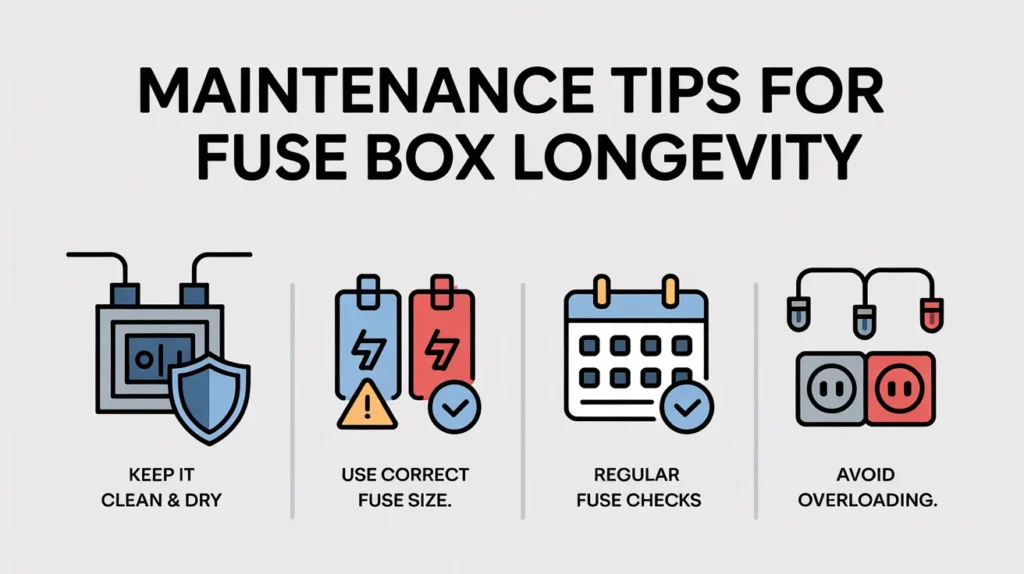
To keep your fuse box working well, keep it clean and dry so it does not rust or get wet.
- Do not use the wrong size fuses or cheap ones.
- Check the fuses every few months for any problems.
- Do not use too many extra gadgets in your car.
Troubleshooting Electrical Issues Using the Start troubleshooting electrical issues with your fuse box: effectively:
- Look for blown fuses: If a fuse is dark or broken, replace it with a new one with the same number.
- Check fuse connections: Loose or dirty connections can cause power to stop. Clean them or make them tighter.
- Test the features: If something still does not work after changing the fuse, check the button or wires.
- Use a fuse puller: Always use a fuse puller or pliers to safely take out fuses without breaking them.
- Avoid Overloading Circuits: Too many accessories can repeatedly blow fuses; use only approved electrical add-ons.
- Replace bad relays: If a fuse keeps blowing, another component or a faulty wire could be the cause.
- Go to a mechanic: If things do not work after you check the basics, have an expert look at it.
Understanding Fuse Box Safety
Why Fuse Safety Matters
A good fuse keeps your car’s wires safe from getting too much power. Using the wrong fuse can get things too hot and even cause a fire. Always check the fuse number before you replace it.
Tips for Safe Handling
Always turn off your car before you open the fuse box. Use tools with handles that do not carry electricity. Never force a fuse in; this can cause short circuits or shocks.
Common Electrical Problems Linked to the Fuse Box
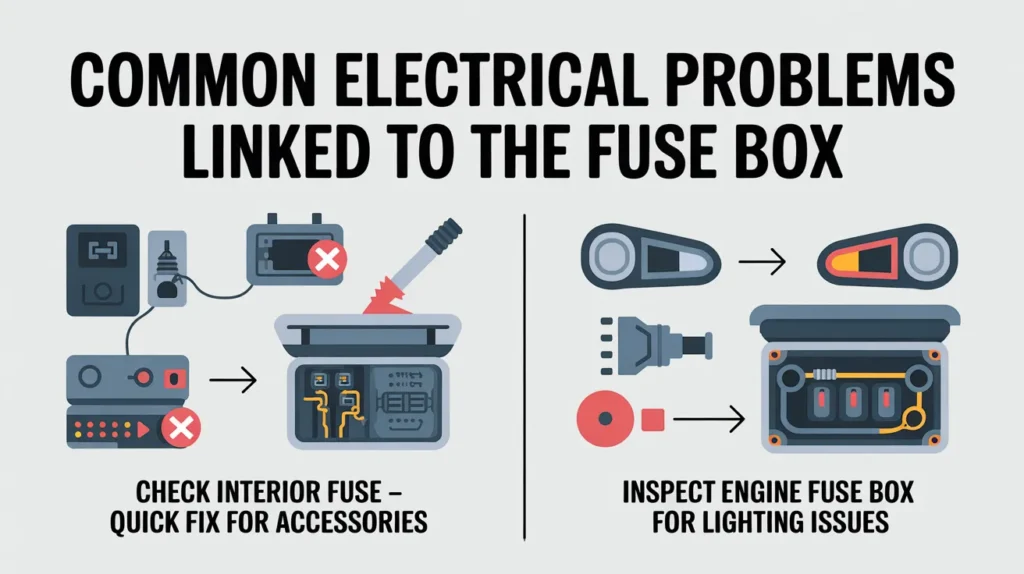
Power Loss in Accessories
If your power windows, locks, or radio stop working, check the corresponding interior fuse. Replacing a single fuse often restores normal operation instantly.
Lighting or Signal Failure
If headlights, brake lights, or turn signals do not work, it is usually a fuse in the engine area fuse box. Check the chart, swap the bad one, and make sure the lights work again.
Also Read: 2018 Ford Explorer Oil Type
FAQ‘S
1. Can a fuse cause my 2002 Ford Explorer not to start?
A blown fuse related to the starter relay or ignition system can prevent your Ford Explorer from starting. Checking and replacing the correct fuse can often resolve the issue promptly.
2. Is it safe to drive with a blown fuse in my Ford Explorer?
No, it’s not recommended. A blown fuse can disable important systems, such as headlights or the fuel pump, which can be unsafe. Always replace it before driving again.
3. Does the 2002 Ford Explorer have more than one fuse box?
Yes, the 2002 Ford Explorer has two main fuse boxes: one located inside under the dashboard and another in the engine compartment near the battery. Each box controls different vehicle systems.
4. What should I do if the same fuse keeps blowing repeatedly?
Yes, if the same fuse keeps blowing, it usually indicates a deeper electrical issue—such as a short circuit, weak wiring, or a faulty component. Simply replacing the fuse is only a temporary solution, so it’s best to have a professional inspect the system.
5. Are all fuses in the 2002 Ford Explorer the same?
No, each fuse in the 2002 Ford Explorer serves a specific function. One may power the headlights, another the radio, and another the power windows. Refer to the fuse box diagram inside the cover or in your owner’s manual to determine each fuse’s purpose.
Also Read: How does the Ford Buy Back Program work
Conclusion:
The 2002 Ford Explorer Fuse Box Guide makes it easy to locate fuses, understand their functions, and fix common electrical problems with confidence. By using the diagrams, tips, and safety steps in this guide, you can quickly restore power, avoid damage, and keep your Explorer running smoothly for years to come.