Overview of Ford Truck Manufacturing – Ford Production Guide
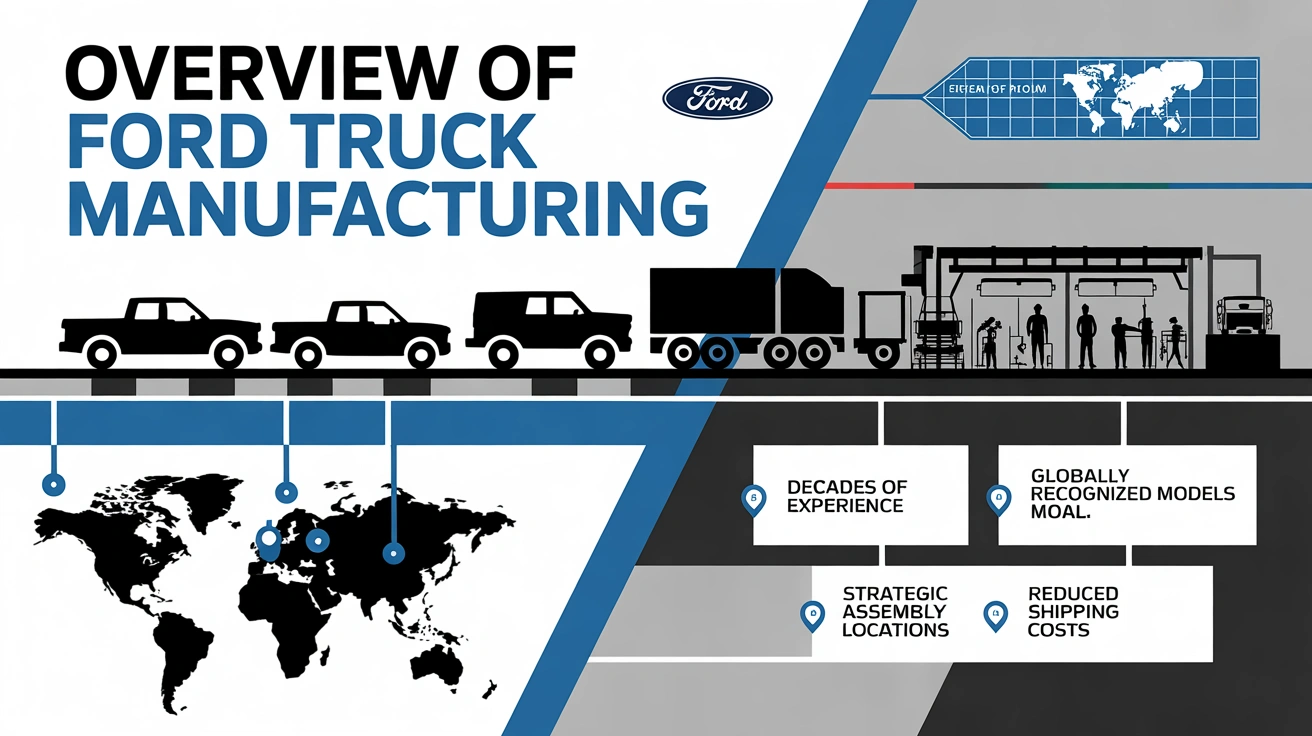
Ford has manufactured trucks for decades and produced some of the most iconic vehicles worldwide. Its global presence showcases years of experience in building reliable, durable trucks. Ford strategically selects assembly locations to meet market demand, reduce shipping costs, and ensure timely customer deliveries.
In this guide, By learning how Ford manufactures its trucks, you can better appreciate the effort, innovation, and engineering behind every model. This knowledge also helps buyers make confident and informed decisions.
Major Ford Truck Plants in the United States
To build a strong presence in its home market, Ford operates several major plants across the country. The following are key facilities that contribute to Ford’s U.S. truck production.
The Dearborn plant in Michigan mainly manufactures F-Series light-duty trucks. Its location near Ford headquarters allows efficient coordination and access to skilled engineers and operators.
Also Read: Is a Ford Escape an SUV – Know Before Buying
Kansas City Assembly Plant – Missouri
This plant produces the Ford F-150 and other trucks. Its central location streamlines nationwide distribution.
Kentucky Truck Plant – Louisville
The Kentucky facility produces Ford’s heavy-duty truck lines, such as Super Duty models. It employs advanced technology and conducts rigorous quality checks to meet high-capacity and commercial market needs.
Ford’s North American Operations
Hermosillo Assembly Plant – Mexico
The Hermosillo plant manufactures trucks for North and South American markets, focusing on cost-effective production while upholding Ford’s quality standards.
Oakville Assembly Complex – Canada
Oakville produces trucks and SUVs, integrates local supply chains with North American distribution, and supports Ford’s regional assembly strategy to efficiently serve specific markets.
Ford Ranger Production Around the World
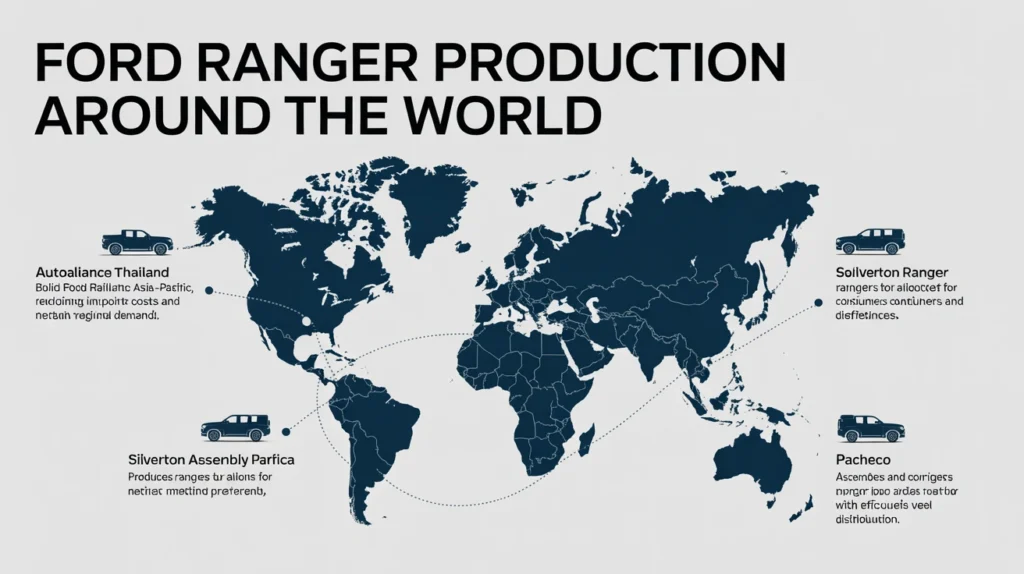
AutoAlliance Thailand Facility
Thailand’s AutoAlliance plant builds the Ford Ranger for Asia-Pacific. Local production reduces import costs and quickly meets regional demand.
Also Read: When Did Ford Own Jaguar
Silverton Assembly Plant – South Africa
This facility produces trucks for the African market and tailors them to local conditions and preferences.
Pacheco Plant – Argentina
The Pacheco plant in Argentina assembles and configures Ford Rangers for South American consumers, ensuring efficient regional distribution.
Emerging Markets and Expansion Plans
Ford adds new assembly lines in Asia-Pacific to meet rising demand. Placing trucks closer to buyers lowers costs and allows Ford to better adapt to local needs.
Electric Truck Production and Future Facilities
Ford is expanding electric truck production to meet rising demand, including models like the F-150 Lightning. The company is investing in future EV and battery facilities that prioritize efficiency, sustainability, and faster customer delivery.
BlueOval City – Tennessee
BlueOval City in Tennessee leads Ford’s electric truck manufacturing, producing models like the F-150 Lightning. The plant uses smart automation and practices green initiatives.
Cologne Electric Vehicle Center – Germany
The Cologne center in Germany manufactures electric trucks for Europe and advances Ford’s transition to electric and zero-emission vehicles.
Factors That Influence Ford’s Assembly Choices
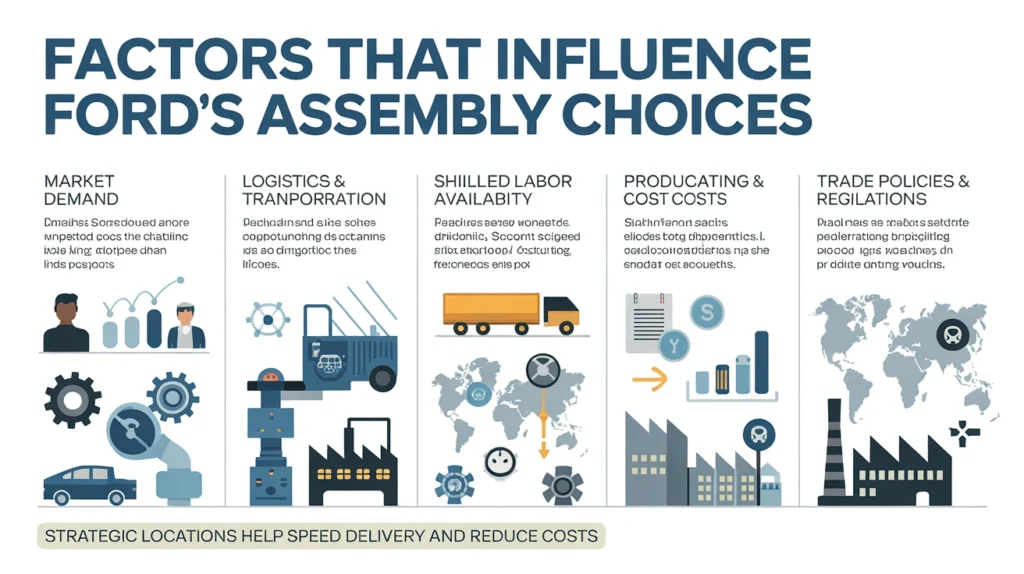
Ford chooses plant sites based on demand, logistics, labor, costs, and trade rules. The right locations speed delivery and lower expenses.
Technology in Ford Truck Manufacturing
Modern Ford plants use automation and robotics to boost efficiency and accuracy. High-tech quality checks quickly identify issues, keeping each truck safe and strong.
Also Read: 2018 Ford Explorer Oil Type
Sustainability and Green Manufacturing
Ford applies eco-friendly practices at its plants, reducing energy use and cutting waste, especially in Dearborn. The company aims for carbon-neutral production to support the environment.
Comparing Ford’s U.S. and Global Production
U.S. plants build many popular trucks, while global plants customize models like the Ranger for local markets. This approach affects truck availability, pricing, and delivery in different areas.
The Role of Partnerships in Global Assembly
Ford collaborates with partners like AutoAlliance Thailand to strengthen production. Local partners and shared suppliers provide Ford with local expertise and help maintain worldwide quality standards.
The Future of Ford Truck Assembly
Ford will offer more electric trucks, modernize factories, and increase automation. These moves will make its trucks greener and ready for all markets.
FAQs About Ford Truck Manufacturing
1. Does Ford have truck assembly plants in the United States?
Yes, Ford has major truck plants in the U.S., including the Dearborn Truck Plant in Michigan, the Kansas City Assembly Plant in Missouri, and the Kentucky Truck Plant in Louisville. These plants produce high-volume trucks like the F-150 and heavy-duty models.
2. Are there Ford truck assembly facilities outside the U.S.?
Yes, Ford has plants in North America, including Hermosillo, Mexico, and Oakville, Canada. Internationally, they also produce trucks in Thailand, South Africa, and Argentina to meet local market demands.
3. Is Ford investing in electric truck production?
Yes, Ford is building advanced facilities like BlueOval City in Tennessee and the Cologne Electric Vehicle Center in Germany to produce electric trucks, including the F-150 Lightning, focusing on sustainability and smart manufacturing.
4. Is all Ford truck production done only in the U.S.?
No, not all production is in the U.S. Many trucks, like the Ford Ranger, are produced in international plants to serve Asia-Pacific, African, and South American markets efficiently.
5. Are all Ford truck plants fully automated without human labor?
No, while automation and robotics play a major role in efficiency and quality control, skilled human workers are still essential for assembly, inspections, and specialized tasks.
Also Read: How does the Ford Buy Back Program work
Conclusion:
Ford’s truck manufacturing network shows the brand’s long-term commitment to quality, innovation, and global reach. From traditional U.S. plants to advanced electric facilities, every location plays a key role in building strong, dependable trucks. Understanding this process highlights why Ford trucks perform so well and continue to earn trust from drivers, businesses, and families around the world.